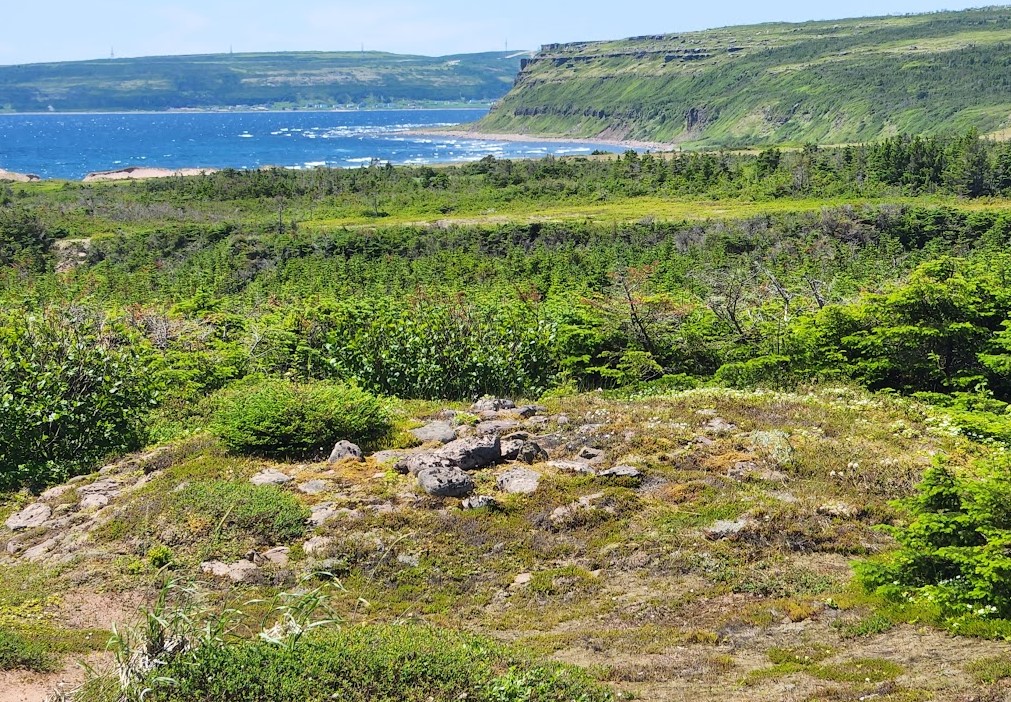
At L’Anse Amour, on the coast of southern Labrador facing the Strait of Belle Isle, resides the oldest known burial mound yet discovered in North America. Although now a good 800 meters from the shoreline, when it was built it was right on the very edge of the shore, perhaps 8 meters back from the water. This round tumulus is roughly 8 meters in diameter, and is covered with large slabs of rock apparently placed there to protect the stone-lined chambered cairn within. The remains of an adolescent boy were discovered beneath this tomb. The body had been painted with red ochre, and was accompanied by a number of grave goods, including spear-points and knives of stone and bone, a walrus tusk, a harpoon head, an ivory carving, and a bone whistle. Experts suggest that the effort to raise the mound took at least a week of dedicated labor, during which significant key members of the band would not have been available to hunt, to fish, or to gather food. This is a significant investment of time and energy amongst a people living a highly marginal lifestyle.
The grave is approximately 7500 years old, which means that this monument predates the Norse encounters with this region by well over 6000 years, and saw those visitors come and go in the blink of an eye. Let that sink in: The first known European visitors to North America arrived many thousands of years after the Maritime Archaic Aboriginals lived in and traversed over this area as they fished and hunted for walrus and seals, resources that have continued to be crucial to this region right up to the present day.
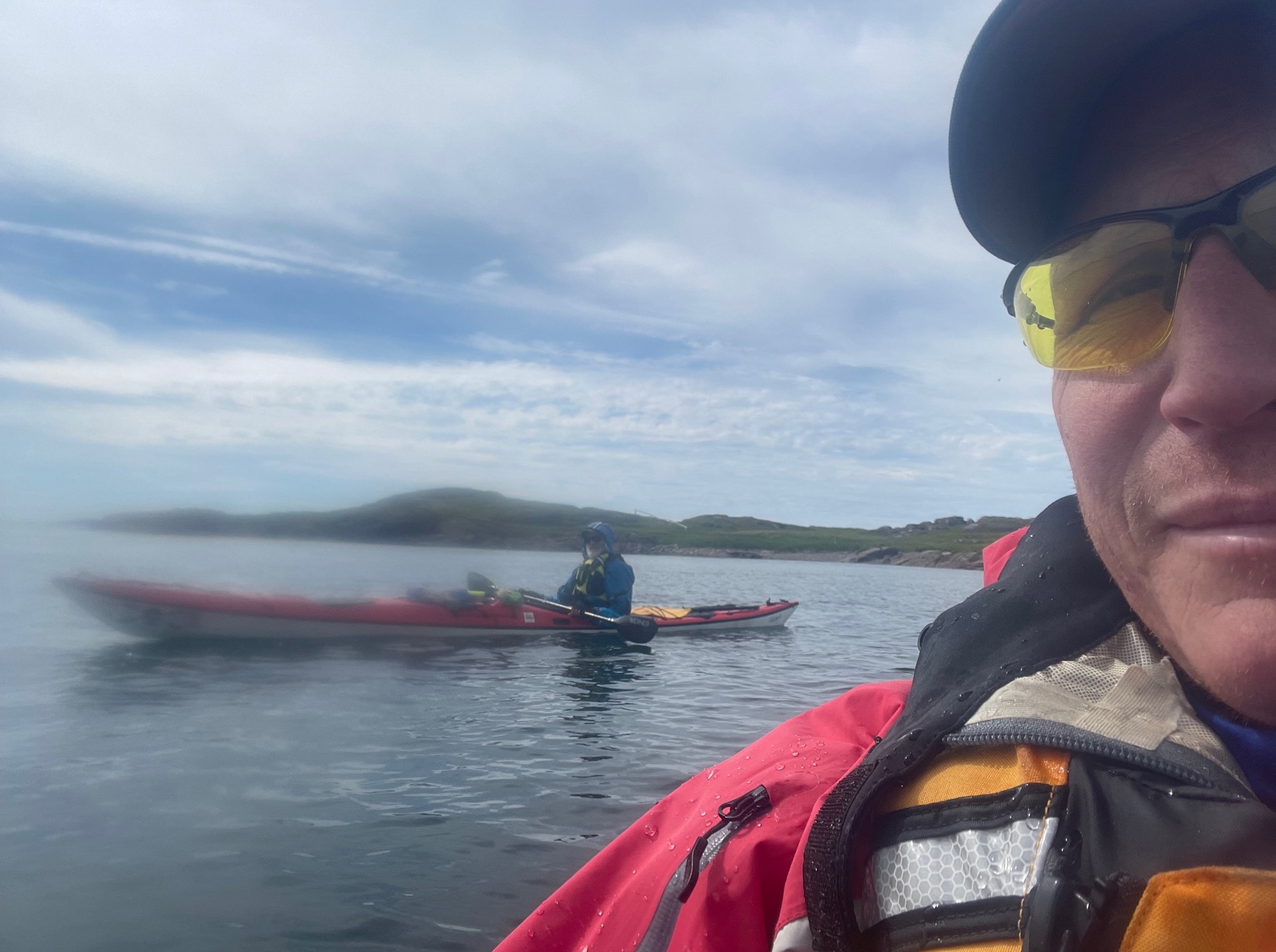
But why mention this undoubtedly interesting site and set of facts in the context of an expedition and book following In the Wake of the Vikings? We’re spending our time in Labrador and Newfoundland trying to become conversant with the coastline, river systems, landscape, and seascape that would have greeted the Norse, some details of which are dimly reflected in the saga record. In order to learn the lay of the land—not to mention the moods of the sea—there is simply no substitute for trekking these areas extensively on foot, in addition to following inviting water ways inland from the sea, much as the Vikings surely would have done. In other posts, we will discuss at length navigational and logistical challenges common to sea-farers from Viking Times right down to our own, as well as the ways that local knowledge and traditional wisdom play key roles in safely planning for and executing such adventures. We’ll also talk about climate and weather and natural resources, and a bit about the present state of archaeology of the known Norse site at L’Anse aux Meadows. We’ll take special pains to look at this landscape and seascape through the pages of the Vinland Sagas, as the Norse records of the Viking settlement in the Western Atlantic are known. Although these sagas read as very matter-of-fact, they were actually written long after the events they record, and by authors with some stake in the material. So we read them carefully, with caution, and with a grain of salt. Still, there are some aspects of the Norse records which seem to gibe fairly well with the existing historical and archaeological records, and whenever possible we will look at all three of these sources in the context of our own on-the-spot explorations.
But back to the Boy Who Keeps Watch. One uncomfortable yet unavoidable set of conversations in our book will concern the Norse attitudes (clearly referenced in the saga record) towards what they termed the “Skrælings,” that is, the indigenous peoples they encountered in Greenland and points further west. These interactions were not always negative, but the very term “Skræling”—which one might render “screecher,” or something of the like—gives some insight into the attitude of the Norse towards those who seemed to them less advanced, and who spoke tongues indecipherable to them. We will have more to say about that later. Having visited many ritual grave sites throughout Northern Europe and the Atlantic Isles, however, I’d be willing to suggest that the care and ceremony with which the L’Anse Amour Lad was laid to rest seems quite significant.
This is especially true because it has several key attributes that are quite akin to those found in similar grave mounds throughout those regions, from the earliest times right through and including the Viking Age. How we deal with death, dying, and our own dead tells us a lot about us. It’s not always clear what that might be, but this sort of intense labor, time, and effort always means something, and generally something fairly significant. This is not to assert that the Boy Who Watches over the Strait was necessarily related directly to the Indigenous First Nations with whom the Norse came into contact and conflict, although even after millennia, their lifeways might well have had some significant areas of overlap. Much more to my point, however, the family and clan of The Boy Who Keeps Watch treated him in ways not very unlike those of the ancestors of those same Norsemen who sailed this very channel under his watchful gaze.
Follow along on our ongoing adventures in ten-minute intervals via this link:
https://share.garmin.com/IntheWakeoftheVikingsCFee
https://www.thecanadianencyclopedia.ca/en/article/lanse-amour-site
 In the Wake of the Vikings