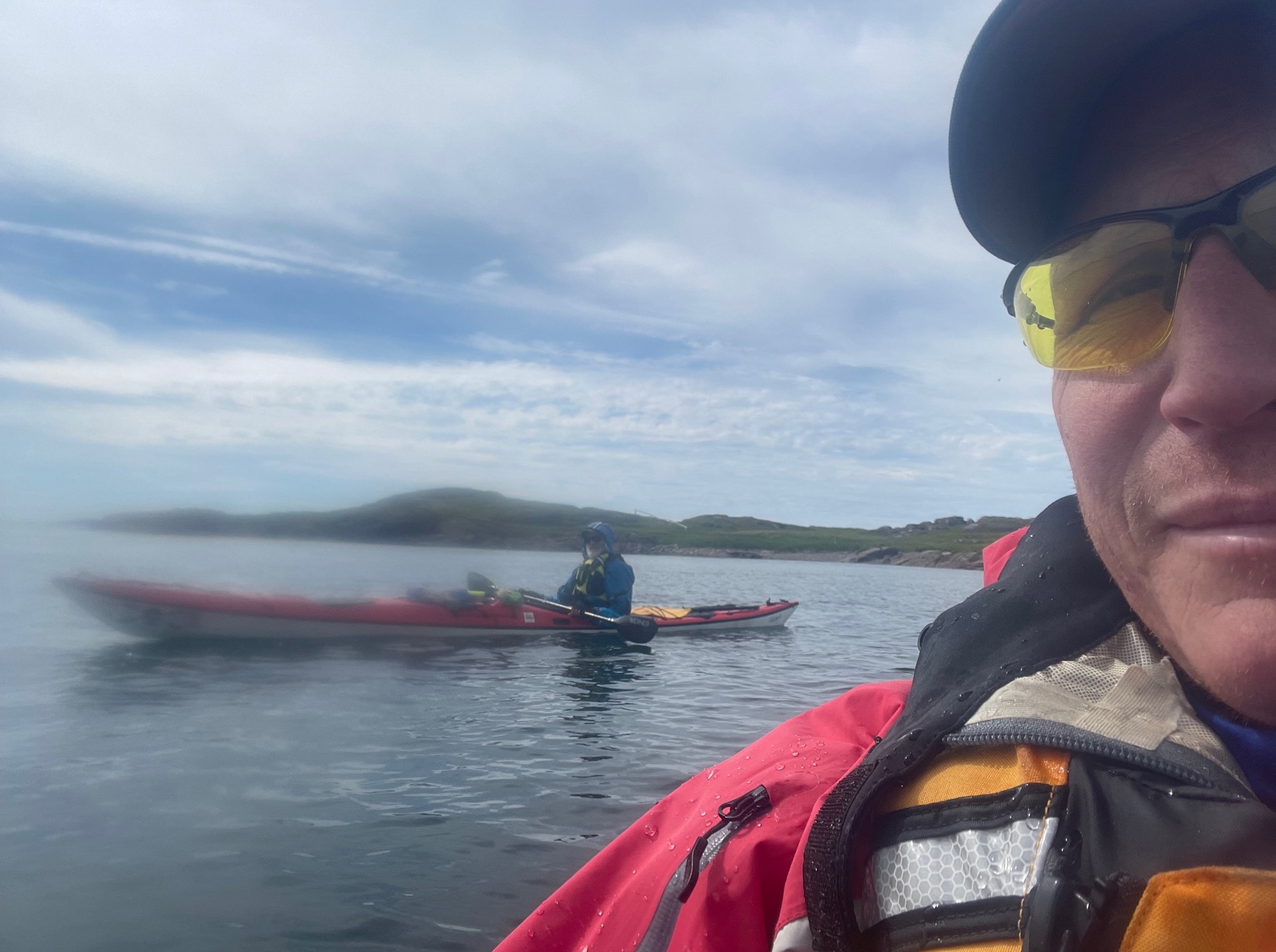
To my mind, Team Viking’s expedition has been a tremendous success. We were able to trace relevant sections of the route the Norse likely took around the tip of Labrador into the Strait of Belle Isle and along the coast of Newfoundland. We paddled right up to the Settlement Site at L’Anse aux Meadows. We were able to examine this key location—and a number of other relevant physical places and imaginative spaces—both on land and from the water. We were able to note, up close and personal, the realities of wind, weather, tide, and currents that the Norse very likely encountered, at least during the summer sailing season throughout the relatively warm period in which the colony was founded. This, by and large, is what we had set out to do: To paddle, at least in brief and in part, In the Wake of the Vikings, and to see what insights our adventures might afford us into the experience of those earlier seafarers. Our blog entries provide some examples of some of the thoughts that were foremost in our minds during our adventures. As we reflect upon these words during our work on our book manuscript in the coming months, they will, as it were, provide plenty of grist for our intellectual Amloði’s mill (a bit of Old Norse Eddic humor for the Hamlet fans out there!)
It is important at this point, however, not to claim too much: First of all, we were not following some sort of Viking Age chart that showed us exactly where such-and-so Norse ship departed and arrived, with all the waypoints conveniently noted. No such chart exists, of course, and even if it did, we wouldn’t have been able to paddle from Greenland to Baffin Island to northern Labrador and down the long, long coast to the Strait of Belle Isle. We never could have accomplished that, even if we had the time. Our original plan, in fact, had been to spend the bulk of the summer, with most of the ice gone and the best paddling weather (from early July through mid-August) upon us, navigating a little ways down the eastern coast of Labrador and thence into the Strait of Belle Isle. We had hoped to have favorable conditions around the shortest crossing point (perhaps around Point Amour) and to paddle over to Green Island Cove (or whatever point the wind most easily allowed) on Newfoundland and thence up the coast to L’Anse aux Meadows. Although the crossing of the strait itself could have been accomplished in one very challenging day, the rest of the trip would have taken us 4-6 weeks, at best, even given excellent conditions, and of course one can’t count on that, as our own experience has illustrated amply.
With Russell’s death, however, we had to reimagine everything, and so we chose to focus on the most important pieces of the adventure we could still manage with just the two of us. We missed his friendship and his joie de vivre more than anything, but we also felt very keenly the absence of Russell’s deep and comprehensive knowledge of paddling in general and paddling Baffin and Labrador in particular. We subsequently were quite deliberate in using our paddling experiences to gain insight into the realities of navigating the particular coastlines on either side of the strait and in close proximity to L’Anse aux Meadows. What our book loses as an adventure narrative, therefore, we hope that it will gain as a focused examination of the realities of wind, wave, and water in the immediate vicinity of the Norse Settlement.
In addition, the meteorological, economic, political, and virological realities of our own point in time seem particularly instructive in a study of the Norse experience in North America. As the more diligent readers of our blog posts will know, we had to postpone this trip multiple times due to the pandemic. Now, a world epidemic didn’t end the colony at L’Anse aux Meadows, to be sure, and the research seems to indicate that it wasn’t the primary direct cause of the failure of the Greenland colonies, either. If we have learned anything at all in the past couple of years, however, it is how interconnected seemingly disparate things can be, and pandemics clearly have significant economic consequences. In our discussion of the Greenland colonies, we will note ways in which factors such as the collapse of the walrus ivory market and the economic aftermath of the Plague had an impact on those colonies. Climate change was also a factor, which is of course of immediate interest to us in this day and age. The fact that the Norse colony a L’Anse aux Meadows would have been founded during a period of significant warming was not lost on us, visiting Newfoundland during a summer of almost unprecedentedly high temperatures. Again, one does not have to claim that climate change is the most important factor in a given instance to note how it clearly may play a significant role. The issue of First Contact between Europeans and Indigenous Americans likewise was hard to ignore during our travels. Given that the Pope was in Canada when we were, apologizing for the treatment of Canadian First Nations, helped us to keep that aspect of the Norse saga accounts of the Vinland colonies in sharp focus.
In short, our voyage In the Wake of the Vikings was successful because we used the opportunity afforded by our adventure to think in disciplined and deliberate ways about how what was going on around us here and now could inform more fully our study of there and then. In a somewhat literal manner, this often meant paying close attention to the nuts-and-bolts of navigation, as well as to the ongoing challenges of wind and weather and land and sea. More metaphorically, however, we took the opportunity to draw parallels between our research into the people and places of what we have termed the “Norse America” of a thousand years ago with the realities of climate, economics, and intercultural conflict in contemporary Canada.
Thank you for being our shipmates on this journey!
Held og Lykke og Gode Rejser!
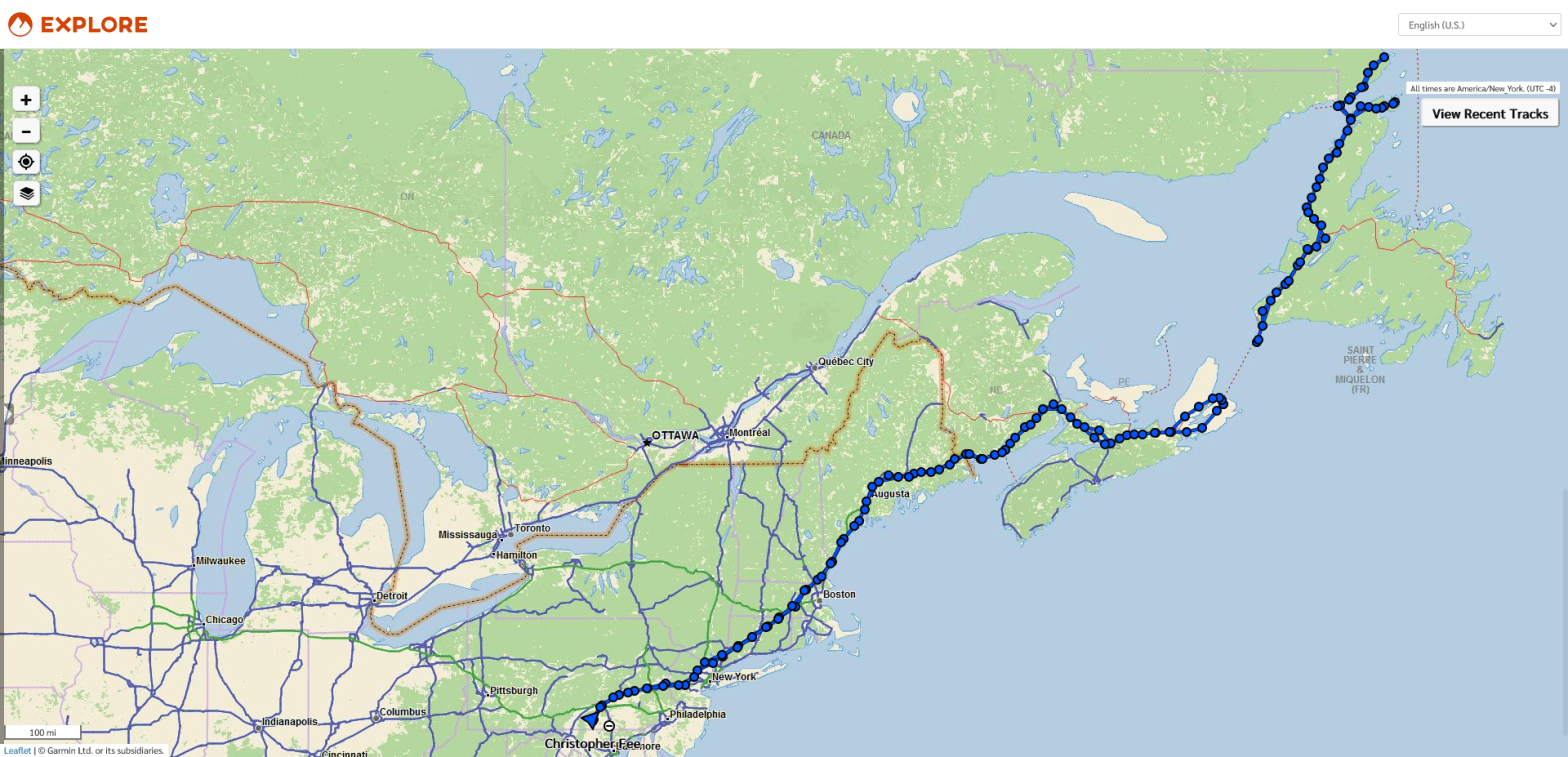
Our Garmin Mapshare function of the adventures of Team Viking is now deactivated; an image of the final map of our overall route is attached to this blog.
 In the Wake of the Vikings