At Long Last, Team Viking Takes the Labrador Plunge

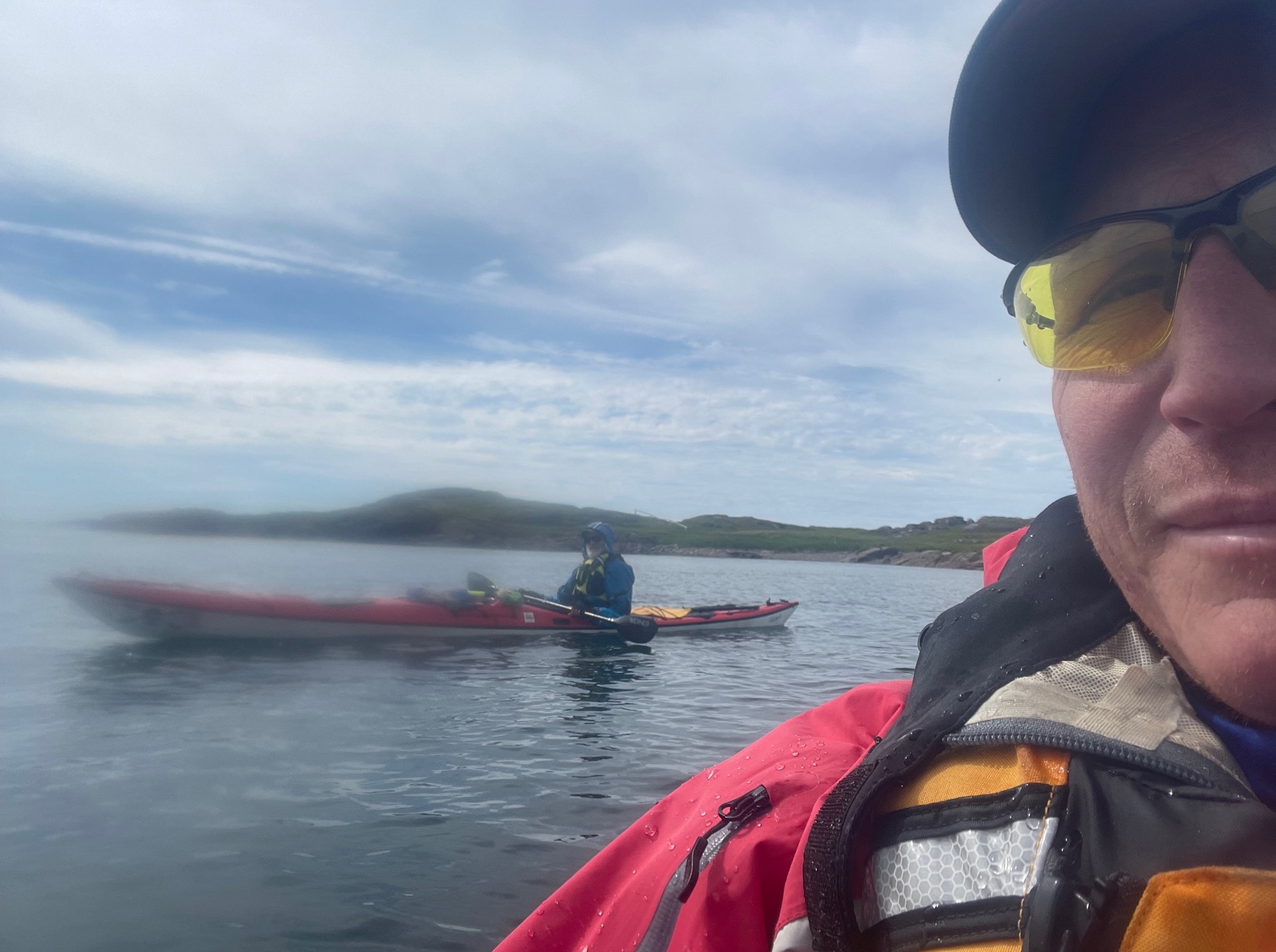
After 5 days, 1600 miles, 8 hours on two different ferries, two hotels, two campgrounds, and a COVID-era Canadian Border Crossing (according to the CBC, looks like mandatory testing is coming back, folks!) Team Viking finally hit the water on the afternoon of Tuesday, 13 July. A big part of our project is researching for our book how the landscapes and seascapes of Markland and Vinland would have appeared from the vantage of the Vikings from the decks of their boats. Thus, we are especially interesting in noting and charting the conditions along the coasts, amenable beaches for landings, protected coves and harbors, and river estuaries that offer easy access to the interior. The area around Pinware River, Labrador, at a narrow point on the Strait of Belle Isle with distant views of Newfoundland, offers all of the above. Furthermore, it is of special interest to us to note how wind, tide, and current combine to facilitate or to hinder access, or in fact to render seemingly inviting areas extremely hazardous. Yesterday’s first plunge into the Pinware gave us a lot to think about on every count. Although the entrance to the river is protected by a long, thin point that acts as something of a seawall, the powerful receding tide (in combination with the river’s not-negligible current) is like a great underwater vacuum cleaner pulling one either to Newfoundland or to the Halls of Ran the Sea Goddess, depending upon the Will of the Norns. Couple this with a western cross-wind at an oblique angle to our route of navigation, and you have a good introduction to paddling in Labrador under quite good conditions in a relatively gentle environment. Challenging as it may have been for the likes of Fee, it was about as straightforward as any of the paddling is likely to be on this trip. In addition to gaining a bit of experience in local conditions, however, we also gained insight into our project. As we sought the sweet-spot between the rocks near the shore and the wind further off-shore, we moved briskly towards the fog-shrouded interior landscape upstream. At that moment, it was not had to imagine ourselves in the company of a  shallow-keeled, narrow-beamed longship, which would have navigated much the same way, and whose rowers would have been drawn to the same beckoning wilderness just around the river’s bend.

Follow along on our ongoing adventures in ten-minute intervals via this link:

https://share.garmin.com/IntheWakeoftheVikingsCFee
The Boy Who Keeps Watch

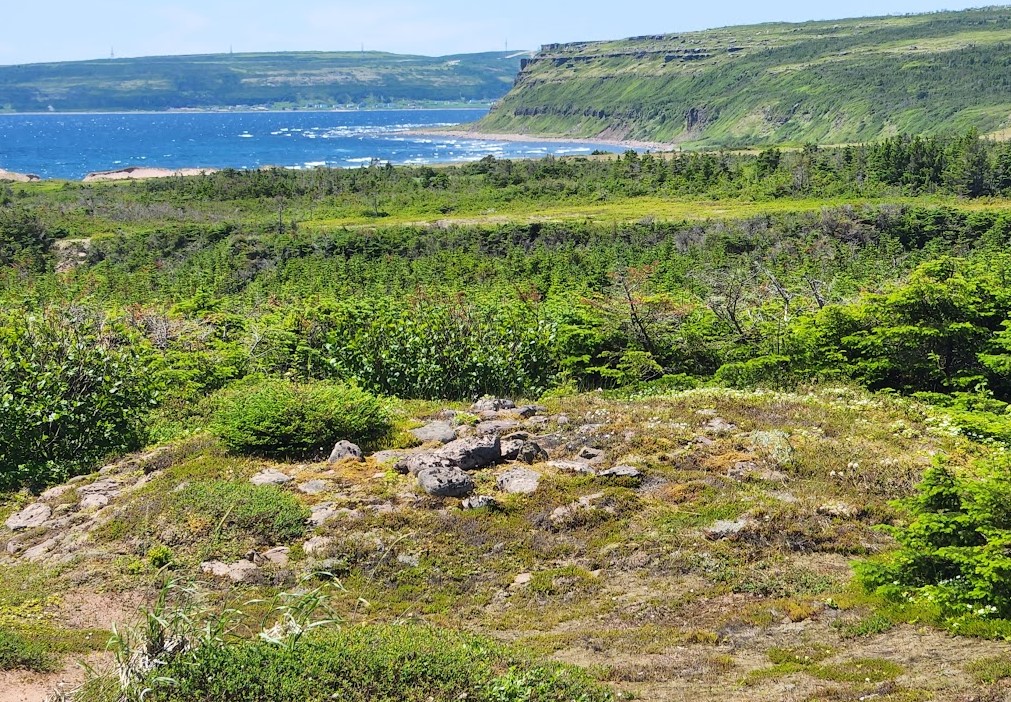
At L’Anse Amour, on the coast of southern Labrador facing the Strait of Belle Isle, resides the oldest known burial mound yet discovered in North America. Although now a good 800 meters from the shoreline, when it was built it was right on the very edge of the shore, perhaps 8 meters back from the water. This round tumulus is roughly 8 meters in diameter, and is covered with large slabs of rock apparently placed there to protect the stone-lined chambered cairn within. The remains of an adolescent boy were discovered beneath this tomb. The body had been painted with red ochre, and was accompanied by a number of grave goods, including spear-points and knives of stone and bone, a walrus tusk, a harpoon head, an ivory carving, and a bone whistle. Experts suggest that the effort to raise the mound took at least a week of dedicated labor, during which significant key members of the band would not have been available to hunt, to fish, or to gather food. This is a significant investment of time and energy amongst a people living a highly marginal lifestyle.

The grave is approximately 7500 years old, which means that this monument predates the Norse encounters with this region by well over 6000 years, and saw those visitors come and go in the blink of an eye. Let that sink in: The first known European visitors to North America arrived many thousands of years after the Maritime Archaic Aboriginals lived in and traversed over this area as they fished and hunted for walrus and seals, resources that have continued to be crucial to this region right up to the present day.

But why mention this undoubtedly interesting site and set of facts in the context of an expedition and book following In the Wake of the Vikings? We’re spending our time in Labrador and Newfoundland trying to become conversant with the coastline, river systems, landscape, and seascape that would have greeted the Norse, some details of which are dimly reflected in the saga record. In order to learn the lay of the land—not to mention the moods of the sea—there is simply no substitute for trekking these areas extensively on foot, in addition to following inviting water ways inland from the sea, much as the Vikings surely would have done. In other posts, we will discuss at length navigational and logistical challenges common to sea-farers from Viking Times right down to our own, as well as the ways that local knowledge and traditional wisdom play key roles in safely planning for and executing such adventures. We’ll also talk about climate and weather and natural resources, and a bit about the present state of archaeology of the known Norse site at L’Anse aux Meadows. We’ll take special pains to look at this landscape and seascape through the pages of the Vinland Sagas, as the Norse records of the Viking settlement in the Western Atlantic are known. Although these sagas read as very matter-of-fact, they were actually written long after the events they record, and by authors with some stake in the material. So we read them carefully, with caution, and with a grain of salt. Still, there are some aspects of the Norse records which seem to gibe fairly well with the existing historical and archaeological records, and whenever possible we will look at all three of these sources in the context of our own on-the-spot explorations.

But back to the Boy Who Keeps Watch. One uncomfortable yet unavoidable set of conversations in our book will concern the Norse attitudes (clearly referenced in the saga record) towards what they termed the “Skrælings,” that is, the indigenous peoples they encountered in Greenland and points further west. These interactions were not always negative, but the very term “Skræling”—which one might render “screecher,” or something of the like—gives some insight into the attitude of the Norse towards those who seemed to them less advanced, and who spoke tongues indecipherable to them. We will have more to say about that later. Having visited many ritual grave sites throughout Northern Europe and the Atlantic Isles, however, I’d be willing to suggest that the care and ceremony with which the L’Anse Amour Lad was laid to rest seems quite significant.

This is especially true because it has several key attributes that are quite akin to those found in similar grave mounds throughout those regions, from the earliest times right through and including the Viking Age. How we deal with death, dying, and our own dead tells us a lot about us. It’s not always clear what that might be, but this sort of intense labor, time, and effort always means something, and generally something fairly significant. This is not to assert that the Boy Who Watches over the Strait was necessarily related directly to the Indigenous First Nations with whom the Norse came into contact and conflict, although even after millennia, their lifeways might well have had some significant areas of overlap. Much more to my point, however, the family and clan of The Boy Who Keeps Watch treated him in ways not very unlike those of the ancestors of those same Norsemen who sailed this very channel under his watchful gaze.

Follow along on our ongoing adventures in ten-minute intervals via this link:

https://share.garmin.com/IntheWakeoftheVikingsCFee

https://www.thecanadianencyclopedia.ca/en/article/lanse-amour-site

Zippers, Latches, and Hatches: Oh, MY!

A few years ago (when I start a sentence with those four words, my dear wife often retorts with something like, “John, hon, you were 27 then.”) Respectfully I am now 50+, though that is neither here nor there…. Anyhoo, “a few years ago” I was climbing in Joshua Tree with my friend and colleague Brad McCutcheon. We were on a multi-pitch climb, and having belayed Brad to the third pitch, it was his turn to lead. When changing the belay, something inconsequential (an empty Goo packet) fell out of my vest pocket. “What the hell’s wrong with you?!” Brad exclaimed, “make sure all your zippers are zipped. If that were a piece of kit, that could be problematic to us or to someone below!” That was a teachable moment for me. Brad was great at keeping his kit organized and systems streamlined. The real learning along these lines, however, happened a few years later when I was in Colorado leading a 12-day winter mountaineering experience with two colleagues and 24 students. The goal was to climb Mt. Shavano in March.

A few days into the trip, I walked out two individuals experiencing altitude sickness. The other instructors and I agreed I would re-enter from a different location and meet everyone at the Mt. Shavano trailhead. The hike back in was spectacular–clear skies, I only tripped once over my snowshoes, there was freshly fallen snow, balmy 7-degree temps, and a lighter pack since I reduced my load when I hit the trail again. When I arrived at our pre-determined location, I set up camp and was excited to have some time to myself. I dug my snow pit, set up the Mega Mid, a single-pole tent, created a bed and a kitchen area, organized my food, set up my stove, and then—horrors!—I could not find my lighters. Any of them. Typically, I carry 4-6. Two issues immediately came to mind—my second set of lighters and flint was left behind with the offloading of gear, and when I tripped in the snow earlier in the day, the zipper to my Patagonia bibs was open. Clearly, my primary lighters had fallen into the snow. I found those lighters three days later when I retraced my route alone, something I was forced to do due to unforeseen Circumstances. In short, the group never joined me at our location. As a result, what was supposed to be a three-hour leisurely wait and some well-earned alone-time turned into a three-day ordeal sitting in that beautiful winter camp without being able to fire up a stove for a hot drink or meal. 

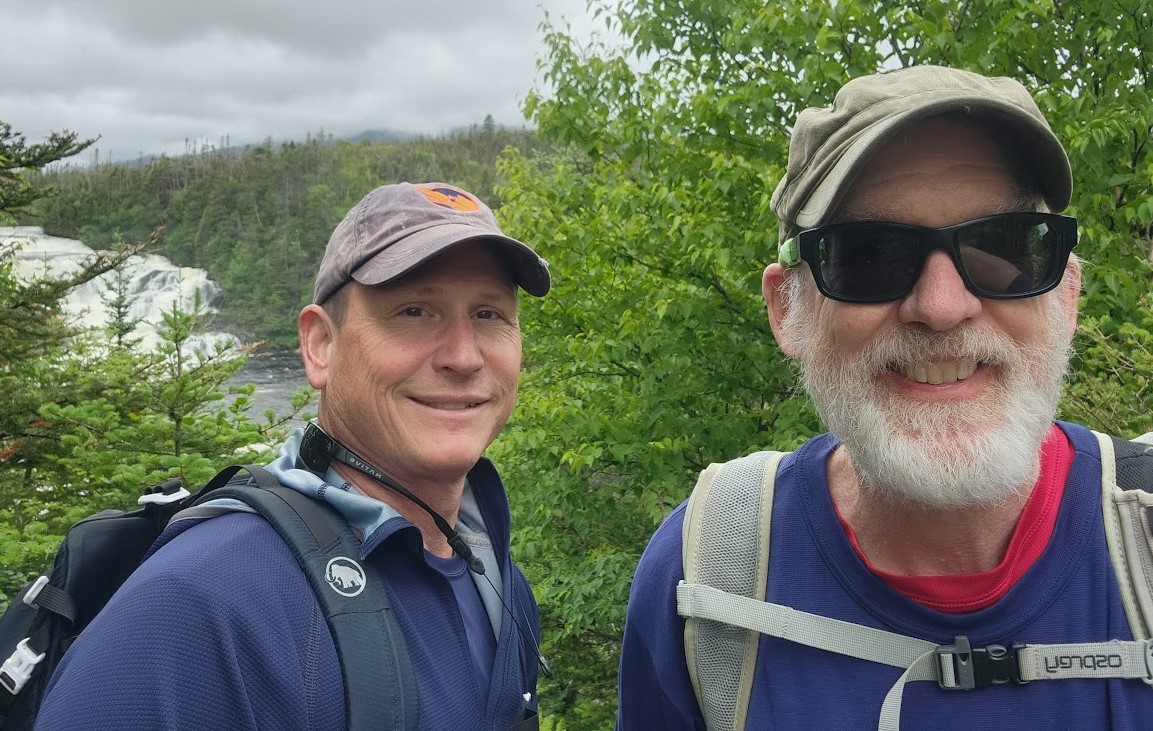
I lead with this thought as Chris and I went for an 11 km hike Sunday, July 10th, after assessing the 23-27 knot winds coming hard off the water. We stopped by the ranger station in Rocky Harbor to pick up a trail map and select a route within the Gros Morne National Park. We did see the trail to the Gros Morne summit, which stands at 806 meters and could take 8-10 hours. That trek piqued my interest, though the park attendant sternly warned us that she would not recommend it. Guess Chris and I did not look the full-on Mountain Man part that day, so we took professional advice and settled on a 9.5 km hike through the bog to reach the beautiful Baker Falls. Afterward, we had enough energy to summit the adorable Berry Hill: 1.5k round trip, with a view at 135m, and a steep enough ascent to feel like a little workout.

While on the Baker Brook Falls trail, I continuously thought about the zipper ordeal. In this case, being on that water here in the Strait of Belle Isle, it is what some of us call a “zero fail” situation: essentially, that means that it is a true life or death circumstance. In Colorado, I had shelter, I could eat unappetizing but caloric uncooked dried ramen noodles, I could adapt to the environment, and I could sustain myself for a few days without worry. Conversely, in the environment we find ourselves in paddling the coasts of Newfoundland and Labrador, every zipper, hatch cover, dry bag, glasses strap, medical kit, Garmin locator, food source, and headlamp has to be 100% hermetically sealed, secured, latched, and otherwise zipped, to mitigate to the fullest degree possible what is always going to be a calculated risk. Even taking all these steps does not eliminate the risk, especially in 40-degree water with the air temps in the high 50’s and low 60s. Cold water immersion comes with immediate consequences. We do not need to be on a multi-day experience to worry about such a scenario—we need to be ready for the conditions even if on the water for just 10 minutes and offshore by only 30 meters. We cannot compromise our systems: When we launch, every zipper, latch, and hatch has to be 100% secured. Trust the gear and mentally prepare. Do it right the first time; you only get one shot each day. 

After we returned to the Berry Hill trailhead, we were famished. The sky was blue, the winds still aggressive, and there was one meal on my mind. Chris saw a sign at the Licensed Family Restaurant, Fisherman’s Landing, advertising their Moose Burger. When in Rocky Harbor, that is what one orders, and make sure it is topped with their special relish. On the other hand, Chris inquired about the fish and chips and asked the same question as before to another waitress, “are your fish and chips any good?” The response is typically, “a lot of people order them.” Chris’s retort is simple, polite, yet to the point: “that is great, and I appreciate the information, but that does not answer the question I asked.” The rest of the evening was uneventful as we prepared our camp and kit to depart in the morning. This was day four, and we finally reached our initial destination in Labrador on Monday afternoon. One more ferry and four more hours in the car, and we were set to arrive in Pinware, Labrador.​

Keep up to date with our adventures and follow our movements in real time through our blog.

Follow along on our ongoing adventures in ten-minute intervals via this link:

https://share.garmin.com/IntheWakeoftheVikingsCFee
On the Viking Trail to the Strait of Belle Isle

On Monday the 11th of July, Team Viking girded their loins for the final dash north up the western coast of Newfoundland to the Labrador Ferry departing from St. Barbe. Although that section of highway is no longer paved with gravel, it was still an adventure to travel at speed over pitted pavement awash with rain, all while hauling a trailer carting three big boats. We were heartened, however, by the fact that the Newfoundland 430 which we were navigating is known as “The Viking Trail.” It is so called because it stretches all the way from Deer Lake inland over the hills to the coastline of Gros Morne, following the spectacular coast of Newfoundland facing Labrador and then eventually stretching its fingers towards the Norse Settlement site at L’Anse aux Meadows. There—Good Thor willin’!—we will be ensconced next week. For the moment, however, our immediate objective was to cross the Strait of Belle Isle at its narrowest point and thus find our way into Labrador. The Strait of Belle Isle is the channel of the Gulf of Saint Lawrence which separates Newfoundland from the mainland, and is the northeastern extremity of the Saint Lawrence Seaway, a remarkable and poignant fact to a Viking of late middle age who recalls with much fondness and many advantages a youth joyously misspent on the Great Lakes…. The ferry station at St. Barbe is tiny, and the ferry itself did not seem nearly large enough for the steady diet of long-haul tractor-trailers, RVs, trucks and cars it consumes daily. This sturdy little boat that could was more than up to the task, however, and sliced through the mildly rolling waters at a jaunty pace. The crossing itself gave a preview of what was to await us on the far shore, moreover, as sheets of rain and perhaps a bit of sleet gave way to mists and fogs that shrouded the far shore almost up to the point of arrival. The shortest crossing actually takes the ferry from St. Barbe, Newfoundland, to Blanc Sablon, Quebec, which is only a short drive to the border into Labrador. This seemingly pedantic logistical factor, however, looms large when one considers that Quebec is on Eastern Time, while most of the Maritimes are on Atlantic time, except for Newfoundland and parts of Labrador, which are another half our ahead of that. So the ferry departed at 3:00 PM, and an hour and a half later, as we came into Blanc Sablon, it was 3:30 PM again. It was 4:00 PM by the time we reached the border with Labrador, at which point it immediately became 5:30 PM. Luckily Vikings carried sunstones, so they knew where the sun was even on a cloudy day. Sort of like GPS is in our own age, such technology is useful for navigation in conditions such as we encountered, not to mention the fact that historically the Vikings are said to have been notoriously unconcerned regarding local time zones….

Follow along on our ongoing adventures in ten-minute intervals via this link:

https://share.garmin.com/IntheWakeoftheVikingsCFee
https://www.science.org/content/article/viking-sunstone-revealed

You GO (to Vinland & Markland!) SylvanSport!

This post has a little less to do with Vikings than one might think at first blush, unless we want to consider the Vikings as “influencers.” That seems to be the “it” tagline these days: The term often is tossed around referring to those who can excite people because they have identified a niche market, taken a unique perspective, and illustrated a dynamic ability to create change. According to these criteria, one might be able to say that the Vikings were influencers, given that they cornered the market in their era regarding sea-faring, exploration, invasion, colonization, and long-distance trading and raiding. They even influenced a fair number of Irish and Finns and others to sign on to the lifestyle.  In our own time, Nordic chic still seems to dominate everything from architecture & design to television programs to tattoo patterns. Check out IKEA, The Vikings on the History Channel and Norsemen on Netflix, or your local hipster bar if you doubt me.

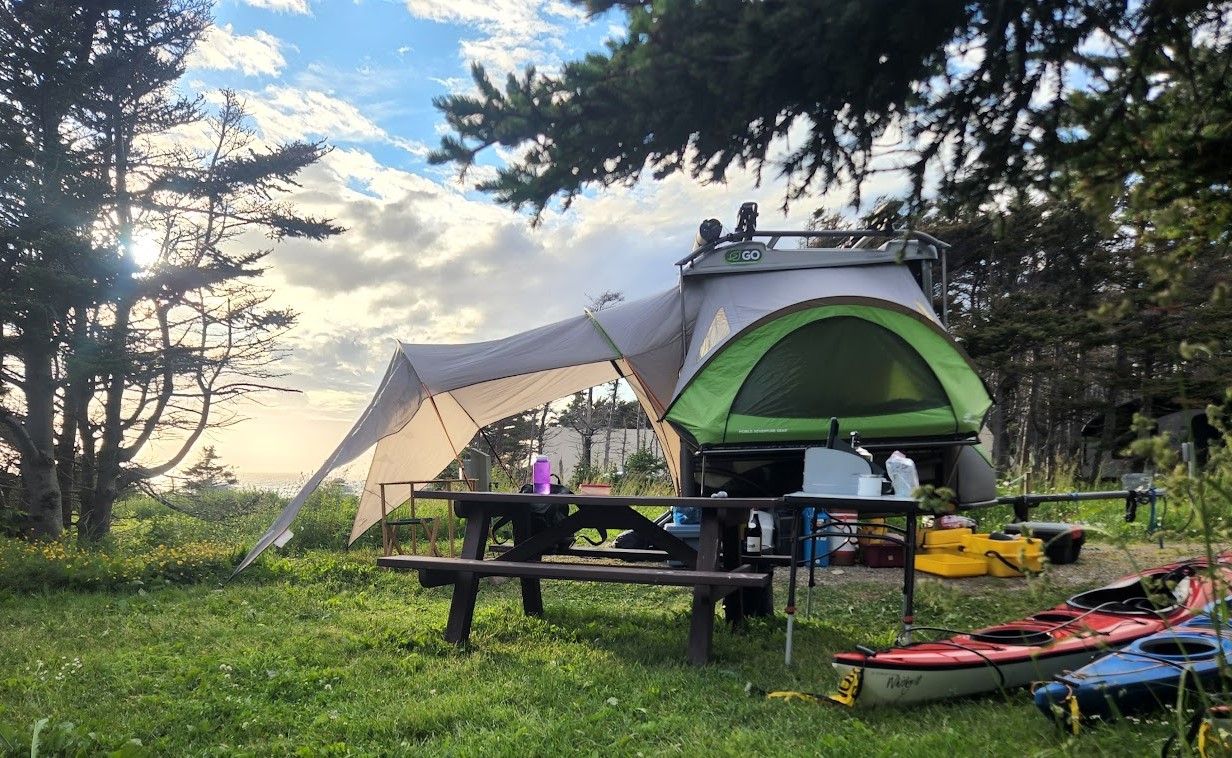
All that said, who would have thought Chris and I could taste the life of being Influencers on our journey to Labrador?  It is not the beautiful Point 65 Whisky 18 sea-kayaks that draw people to us; it is certainly not our stylish looks; instead, it is the SylvanSport GO camper/trailer that we are towing that has people stopping us in hotels, at gas stations, at ferry ports, at campsites, and so on and on. 

We thought we would write about our GO interactions and conversations later in the trip, but after receiving so many inquiries on the versatility of this camping trailer, we thought that it was high time to let SylvanSport know there is a growing following of folks up here in Labrador and Newfoundland who admire your product.   

Chris and I have talked about doing a modified version of what Volvo does in Sweden. We could invite our camping neighbors over, give them a tour of the GO, put them up for a night, and send them on their way with information about the dealerships in Quebec and Ontario. Whereas with Volvo you can drive off with your car and return to the States with it, we still need our GO for the next few weeks!  Therefore, think of us as unofficial SylvanSport ambassadors, forward scouts reconnoitering the camper/trailer market in the new countries known to the Norse as Markland and Vinland, much as the Vikings might send advance parties to discover and report back on new possibilities to grow their international footprint.

Follow along on our ongoing adventures in ten-minute intervals via this link:

https://share.garmin.com/IntheWakeoftheVikingsCFee
Vinland HO!

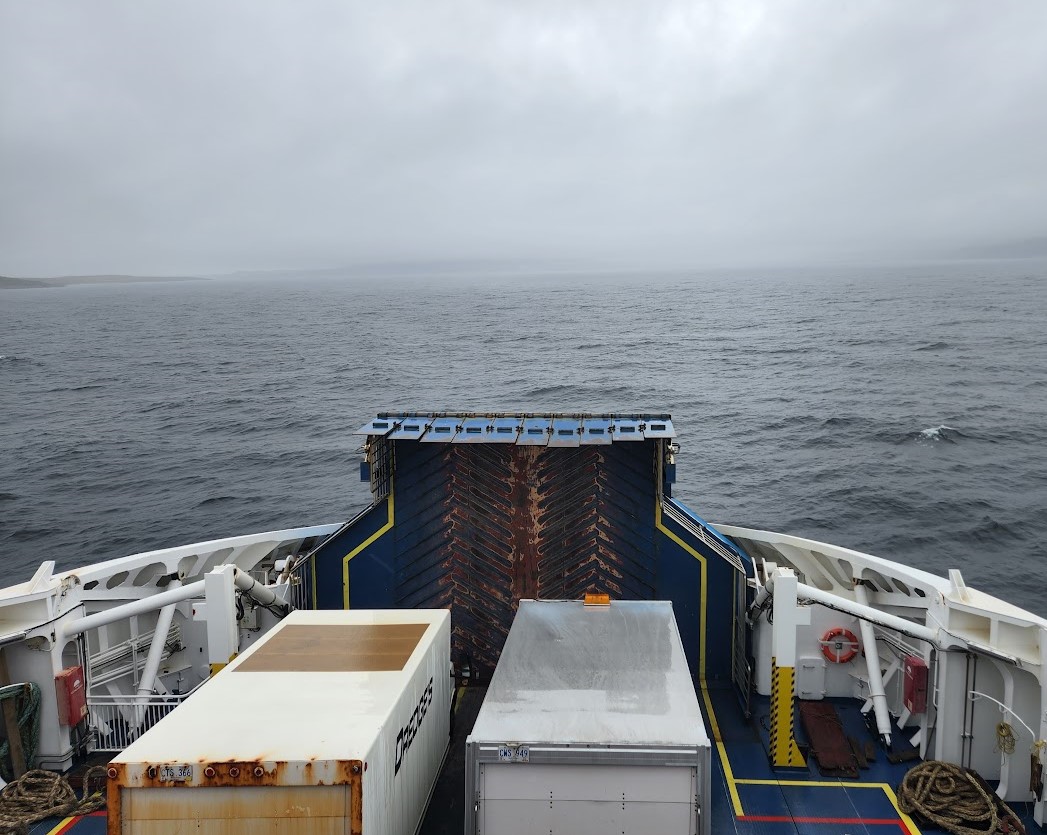
Having raced across New Brunswick and Nova Scotia to reach their ferry port on the eve of their departure, after a lovely evening in Sydney, NS, the following morning our intrepid Team Viking members soon found that in ferry boarding, as in much of life, the mantra of the wizened old veterans is “hurry up and wait….” Although they were queued up to board more than two hours before the ship was to set sail, the Norns again threw our heroes a curve ball. The odd configuration of the Subaru Forester and SylvanSport GO!—in tandem with the tongue extension necessary to haul 18-foot sea-kayaks—ensured that they were relegated to what one loquacious Canadian retired transportation professional referred to as “the goofy lane,” an aisle replete with cars and trucks with trailers, in addition to non-standard-length RVs. This worked to our advantage in one way, however, as numerous folks wandered over in the hours granted to us by our boarding-the-ferry-traffic-jam to admire our trailer and boats and to make friendly conversation to pass the time. The ferry journey itself was uneventful and placid, crossing as we were on a windswept yet glorious afternoon. Shortly before landing our clocks shifted automatically to Newfie Time, which is a half-hour ahead of Atlantic Time, so 90 minutes ahead of the folks at home (As we shift between Newfoundland and Labrador this half hour may again come and go.) After disembarking almost as far back in the queue as we had embarked, we raced the setting sun up the western coast of Newfoundland to our reserved site (#11, for those of you playing at home) at Green Point Campground in Gros Morne National Park, which Russell had specifically wanted us to visit. Even after dark it was apparent why he had been so keen to stay there: Roaring surf, a stiff ocean breeze, the smell of pines, and a Pirates of the Caribbean moon shrouded with shreds of clouds greeted us and enlivened our senses as we set up camp round about midnight. It proved to be one of the most beautiful nights of my entire life. Words fail your normally overly-verbose commentator….

Follow along on our ongoing adventures in ten-minute intervals via this link:

https://share.garmin.com/IntheWakeoftheVikingsCFee
Team Viking Raids Saint John, New Brunswick in the Dead of the Night

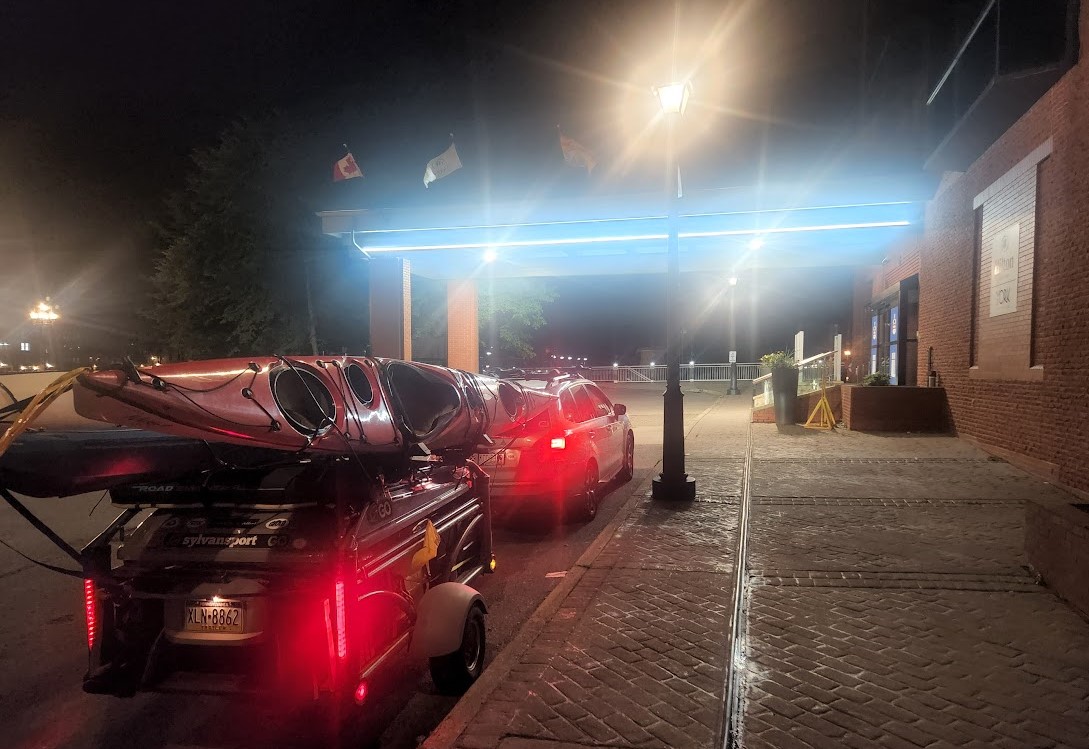
After being denied the possibility of entering into Canada in 2020 and 2021, and at the culmination of several months of fretting over the logistics involved in making our journey in 2022, the crossing itself was anticlimactic, taking perhaps all of 2 minutes. Our Border Guard—well-mannered, quietly jovial, and archetypically Canadian—seemed all alone in the giant plaza at the 3rd Bridge crossing from Calais, Maine, into Saint Stephen, New Brunswick. In fact, we saw no evidence of any other travelers or border agents at all on either side as we approached the gates well after midnight. We didn’t even need to show our vaccination certifications or our hard-earned ArriveCAN receipts and QR codes: We simply flashed our passports, and the COVID info evidently was tied to them. We then relayed our license plate number, told the heroic nature of our adventurous expedition (which earned a placid, barely perceptible  nod from our Border Guard, who has undoubtedly heard it all) disclosed the handful of Viking beverages we were importing into Canada, and acknowledged our possession of the Odinic anti-berserkir potion known as “bear spray.” We then drove on across the border unhindered any further, racing across a darkened landscape to Saint John, where (drawn to the lights of our hotel like einherjar are drawn to Valhalla) we pulled in wharf-side (literally and figuratively!) for a short and fitful—but well-earned and exultant!—night’s sleep.

Follow our journey in ten-minute intervals via this link:

https://share.garmin.com/IntheWakeoftheVikingsCFee

The Heart and Soul of Team Viking

Today is ten years to the day that I flew back from the Baltic region after spending the better part of six weeks sea kayaking from Stockholm, Sweden, to Helsinki, Finland, with a team of colleagues and students from Gettysburg College. This 350-mile journey was a tremendous success, thanks to the expertise, guidance, and friendship of Russell Farrow, Nigel Foster, and Kristin Nelson, who also participated in this expedition. What was supposed to be another expedition with Russell this summer was derailed in May when he succumbed to an unexpected medical situation.

My heart aches for the loss of a dear friend I met in the summer of 2003 while searching for an instrumental partner to help launch a premier sea kayaking platform for Gettysburg College. I was captivated by Russell’s business mantra at Sweetwater Kayaks, based in Saint Petersburg, Florida—“Paddle or Die.”

This is day two of our In the Wake of Vikings expedition, and we are now in Sydney, Nova Scotia. We drove 14 hours yesterday from Gettysburg to St John, New Brunswick. We were uncertain where we would end up, though we knew dinner was waiting for us along the way at our Maine base-camp, operated by Team Viking Official Pit Crew Nancy and Bucky Brown. Last summer, we spent a week in Maine with Russell and Tim preparing for this trip. Meanwhile, unexpectedly and generously, Nancy and Bucky opened their doors to us and provided us the luxury to lounge in their home each night after we paddled, all the while feeding us as if we still were growing adolescent males who required 3000-5000 calories a day to survive. Yesterday evening Nancy and Bucky again took care of the Viking Boys, and we four all lamented together the loss of our beloved Russell.

Last night, after crossing into Canada and making it as far as Saint John, New Brunswick, I rose after a few hours of sleep and went down to check on the kayaks parked outside the front entrance of the Hilton Hotel. Yes, as we drove across the bridge at 2:30 am last night into Saint John, one building stood out with a bright red blurry illuminated sign that spoke to us. Robert, a delightful lad, approached me in the lobby this morning asking about our Sylvansport Go trailer. He said he looked at one during the pandemic, though he was uncertain about its utility. After seeing our trailer loaded with our kit and kayaks, he’s eager to head south to find one for his boats. Thanks, Robert, for keeping your eye on gear while we slept and for the morning conversation about paddling in the region.

As Chris and I headed north in the driving rain later today, I thought back to my morning encounter with Robert, and I missed Russell being there with me. I miss his wit, his ability to make the most random connections, his sharing of his excitement about what’s to come, and most importantly, his priority of always asking where to find the best espresso in town. I will take what I miss and leverage that energy, channeling Russell’s ever enthusiastic and generous spirit as we move forward these next few weeks. ​

Follow our journey in ten-minute intervals via this link:

https://share.garmin.com/IntheWakeoftheVikingsCFee
Make a Run for the Border! Team Viking Heads North

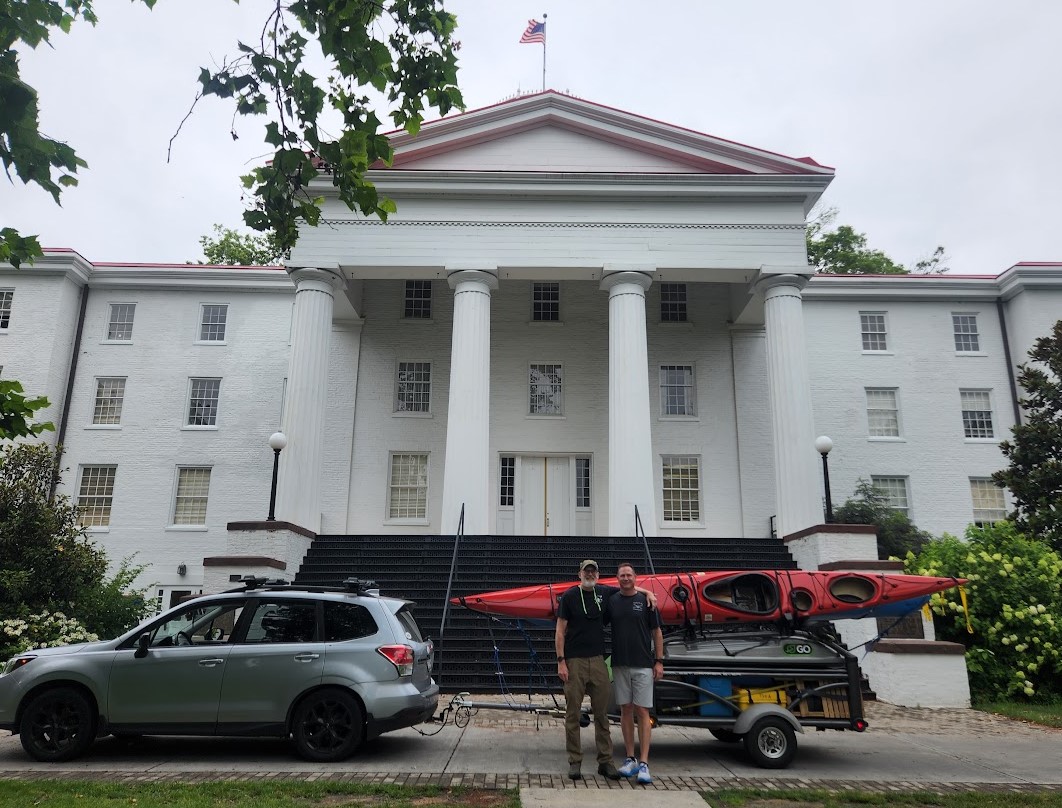
This morning Team Viking began the long, arduous trip to Labrador, which is the very first step on the path of our adventure In the Wake of the Vikings. Beginning from iconic Pennsylvania Hall on the campus of Gettysburg College, shortly after 9:15 AM on July 7th, we headed out on the first leg of the 20-hour trip to the ferry station in Nova Scotia. We hope to be in Labrador by the afternoon of Monday the 10th, which perhaps gives one a sense of the scale of the expedition even before the first of our boats hits the water. Our departure was celebrated by a small group of loyal supporters, supplemented by shout-outs from the sidewalk from a couple more fans of Team Viking. We wore our Sweetwater Kayaks t-shirts in honor of our lost friend and partner Russell, as well as to call to mind many happy paddling adventures with him and his loyal cohort Tim. The discerning observer also will note the boat racks atop the car, which will allow us to leave the trailer set up as our basecamp when we take the boats to launch points for day-trips and overnight pack-and-paddles off the coast of Labrador and Newfoundland. We plan to break our journey this evening for dinner en route in Maine with old friends and honorary Team members Bucky and Nancy. More anon! Follow along in ten-minute intervals via this link!

https://share.garmin.com/IntheWakeoftheVikingsCFee
Setting Sail In the Wake of the Vikings

On July 7th, Team Viking is scheduled to set sail for adventure, careening up the Eastern Seaboard of the United States, hopefully crossing the Canadian border without mishap, and cruising across New Brunswick and Nova Scotia en route to our ferry departure from North Sydney, NS to Port aux Basques, Newfoundland, at noon on the 9th. We are scheduled to spend two days at Gros Morne National Park on our way to the ferry from St. Barbe, Newfoundland, to Blanc Sablon, Quebec. From there it is a short way to our base camp at Pinware River Provincial Park in Labrador. We plan to spend a week exploring the coast of Labrador and all the beauty and richness it offers before crossing back over to Newfoundland and spending a week navigating the coast of that island in the vicinity of the Norse settlement site at L’Anse aux Meadows National Historic Site. When internet access allows, we will attempt to add entries to this blog detailing our adventures. Throughout our trip, we will be tracked via satellite, and interested readers may follow our journey in real time, if you allow for short intervals as the electronic messenger ravens bounce around Valhalla and Jotunheim before returning to the mortal plane of Midgard. The map will update at 10-minute intervals, according to the will of the electro-Norns, although we will seldom journey at night. The map-sharing function for our peregrinations will begin at NOON on Thursday, 7 July 2022:

https://share.garmin.com/IntheWakeoftheVikingsCFee