A few years ago (when I start a sentence with those four words, my dear wife often retorts with something like, “John, hon, you were 27 then.”) Respectfully I am now 50+, though that is neither here nor there…. Anyhoo, “a few years ago” I was climbing in Joshua Tree with my friend and colleague Brad McCutcheon. We were on a multi-pitch climb, and having belayed Brad to the third pitch, it was his turn to lead. When changing the belay, something inconsequential (an empty Goo packet) fell out of my vest pocket. “What the hell’s wrong with you?!” Brad exclaimed, “make sure all your zippers are zipped. If that were a piece of kit, that could be problematic to us or to someone below!” That was a teachable moment for me. Brad was great at keeping his kit organized and systems streamlined. The real learning along these lines, however, happened a few years later when I was in Colorado leading a 12-day winter mountaineering experience with two colleagues and 24 students. The goal was to climb Mt. Shavano in March.
A few days into the trip, I walked out two individuals experiencing altitude sickness. The other instructors and I agreed I would re-enter from a different location and meet everyone at the Mt. Shavano trailhead. The hike back in was spectacular–clear skies, I only tripped once over my snowshoes, there was freshly fallen snow, balmy 7-degree temps, and a lighter pack since I reduced my load when I hit the trail again. When I arrived at our pre-determined location, I set up camp and was excited to have some time to myself. I dug my snow pit, set up the Mega Mid, a single-pole tent, created a bed and a kitchen area, organized my food, set up my stove, and then—horrors!—I could not find my lighters. Any of them. Typically, I carry 4-6. Two issues immediately came to mind—my second set of lighters and flint was left behind with the offloading of gear, and when I tripped in the snow earlier in the day, the zipper to my Patagonia bibs was open. Clearly, my primary lighters had fallen into the snow. I found those lighters three days later when I retraced my route alone, something I was forced to do due to unforeseen Circumstances. In short, the group never joined me at our location. As a result, what was supposed to be a three-hour leisurely wait and some well-earned alone-time turned into a three-day ordeal sitting in that beautiful winter camp without being able to fire up a stove for a hot drink or meal.
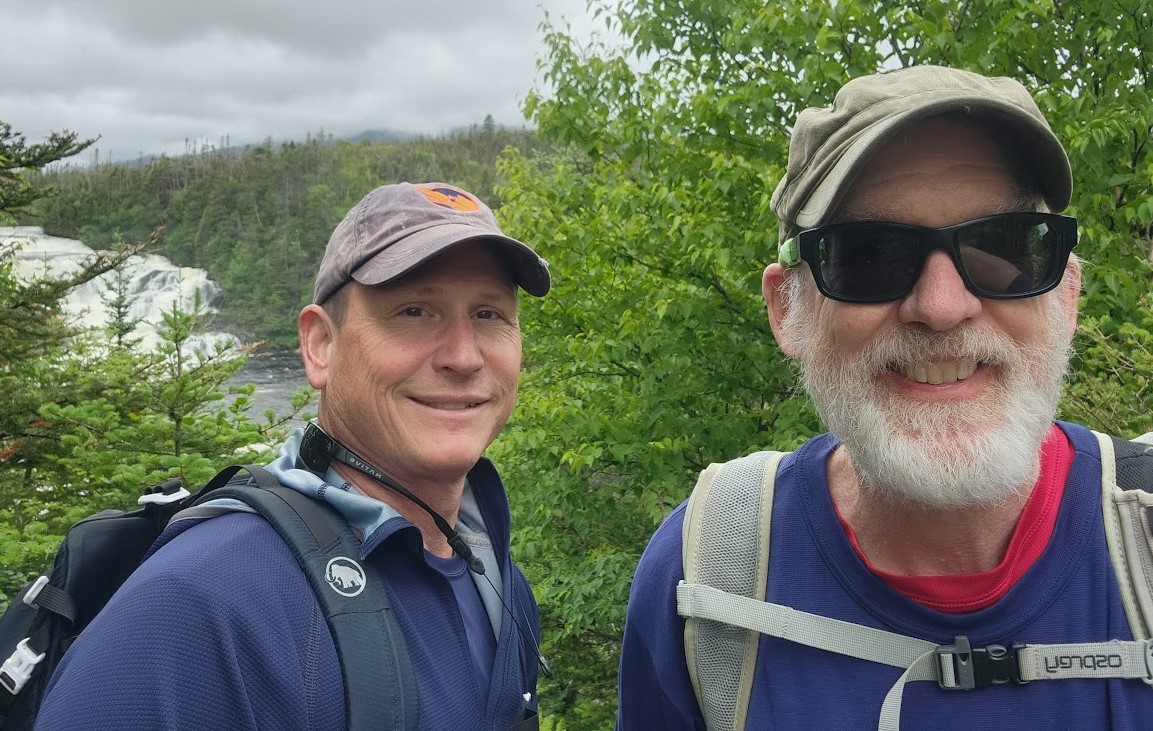
I lead with this thought as Chris and I went for an 11 km hike Sunday, July 10th, after assessing the 23-27 knot winds coming hard off the water. We stopped by the ranger station in Rocky Harbor to pick up a trail map and select a route within the Gros Morne National Park. We did see the trail to the Gros Morne summit, which stands at 806 meters and could take 8-10 hours. That trek piqued my interest, though the park attendant sternly warned us that she would not recommend it. Guess Chris and I did not look the full-on Mountain Man part that day, so we took professional advice and settled on a 9.5 km hike through the bog to reach the beautiful Baker Falls. Afterward, we had enough energy to summit the adorable Berry Hill: 1.5k round trip, with a view at 135m, and a steep enough ascent to feel like a little workout.
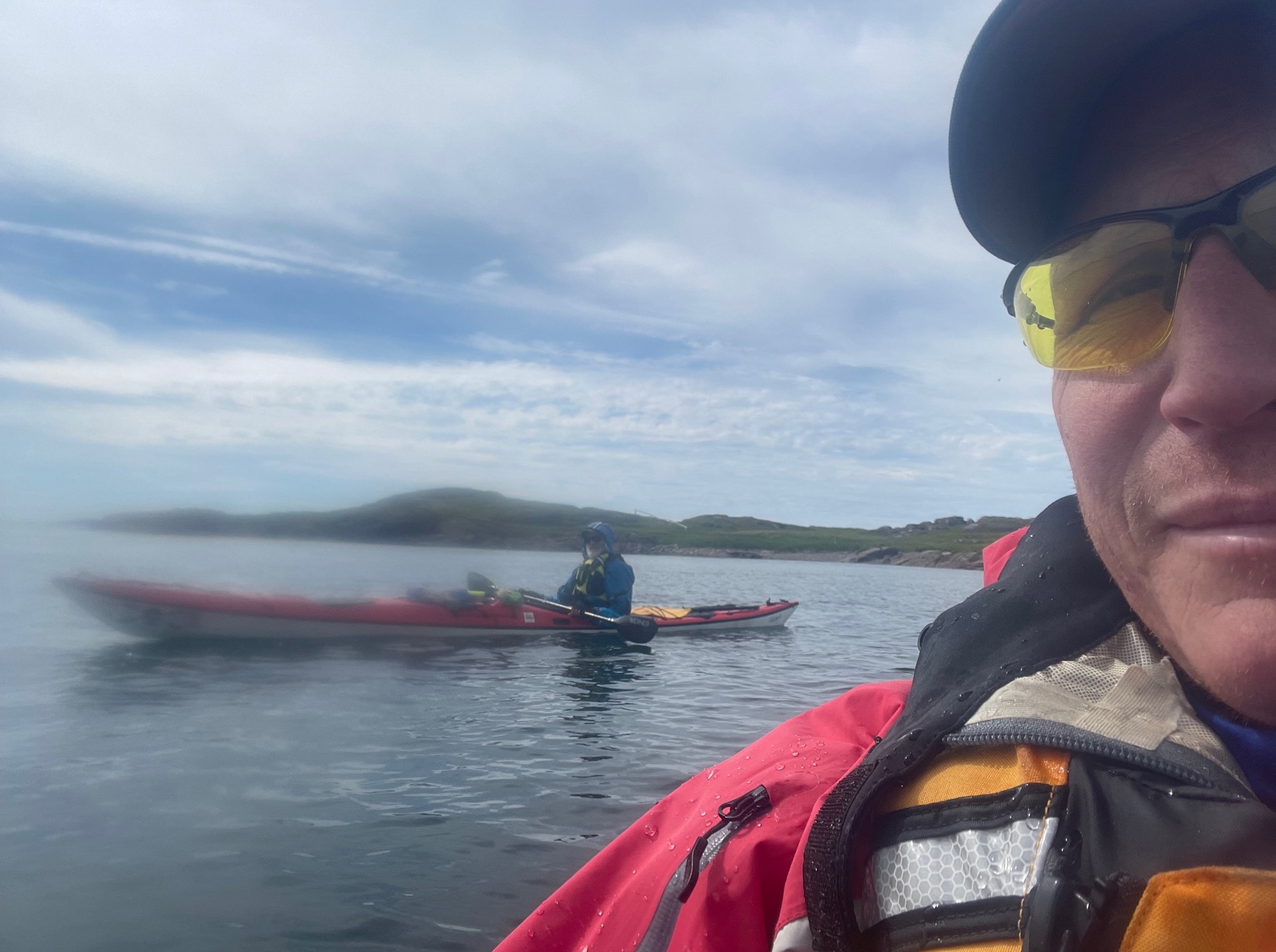
While on the Baker Brook Falls trail, I continuously thought about the zipper ordeal. In this case, being on that water here in the Strait of Belle Isle, it is what some of us call a “zero fail” situation: essentially, that means that it is a true life or death circumstance. In Colorado, I had shelter, I could eat unappetizing but caloric uncooked dried ramen noodles, I could adapt to the environment, and I could sustain myself for a few days without worry. Conversely, in the environment we find ourselves in paddling the coasts of Newfoundland and Labrador, every zipper, hatch cover, dry bag, glasses strap, medical kit, Garmin locator, food source, and headlamp has to be 100% hermetically sealed, secured, latched, and otherwise zipped, to mitigate to the fullest degree possible what is always going to be a calculated risk. Even taking all these steps does not eliminate the risk, especially in 40-degree water with the air temps in the high 50’s and low 60s. Cold water immersion comes with immediate consequences. We do not need to be on a multi-day experience to worry about such a scenario—we need to be ready for the conditions even if on the water for just 10 minutes and offshore by only 30 meters. We cannot compromise our systems: When we launch, every zipper, latch, and hatch has to be 100% secured. Trust the gear and mentally prepare. Do it right the first time; you only get one shot each day.
After we returned to the Berry Hill trailhead, we were famished. The sky was blue, the winds still aggressive, and there was one meal on my mind. Chris saw a sign at the Licensed Family Restaurant, Fisherman’s Landing, advertising their Moose Burger. When in Rocky Harbor, that is what one orders, and make sure it is topped with their special relish. On the other hand, Chris inquired about the fish and chips and asked the same question as before to another waitress, “are your fish and chips any good?” The response is typically, “a lot of people order them.” Chris’s retort is simple, polite, yet to the point: “that is great, and I appreciate the information, but that does not answer the question I asked.” The rest of the evening was uneventful as we prepared our camp and kit to depart in the morning. This was day four, and we finally reached our initial destination in Labrador on Monday afternoon. One more ferry and four more hours in the car, and we were set to arrive in Pinware, Labrador.
Keep up to date with our adventures and follow our movements in real time through our blog.
Follow along on our ongoing adventures in ten-minute intervals via this link:
 In the Wake of the Vikings
Sounds like you guys are already killin’ it!
LikeLiked by 1 person