An evocative experience right before we landed at L’Anse aux Meadows triggered a set of powerful memories and took me many years back in time. “What is It?” Sheena Gibson had exclaimed while on one of our ten-day sea kayaking trainings for Gettysburg College in the mid-2000s. The seasoned student facilitators would often talk about “It” in reference to the program and the personal journey they were experiencing. You would hear them say phrases like, “you will know It when you feel it” or “I had another It moment today.” And the newer staff members were consistently confused and would retort with, “what is It, and how do I get it?
“You will know, on the day it will happen…that is the power of It, and it is because of It, that we facilitate these experiences.”
For those of you wondering, Sheena eventually experienced It.
I have witnessed and heard of many It moments. It happens often on the Gettysburg Battlefield, while working with my professional leadership groups, when people take a pause and slowly wipe tears from the corners of their eyes. Or along the beaches of Normandy while guiding a trek, when someone suddenly stops and, with poetic grace, places the outstretched palm of a hand on the sand. Or witnessing someone watch the sun slowly disappear behind the reeds and calm water on the Sound of North Carolina on a cool spring evening. In those moments, it is hard to articulate what It is like for them, though I can say that It happened. There is a sense of power that comes with place, space, triumph, and tragedy, coupled with the opportunity to pause and let that moment consume and ground you. I myself have had many of these It moments, which is why I still desire to be in the field and create the space and opportunities for others to continue to acquire personal insights and evolve their sense of self and purpose.
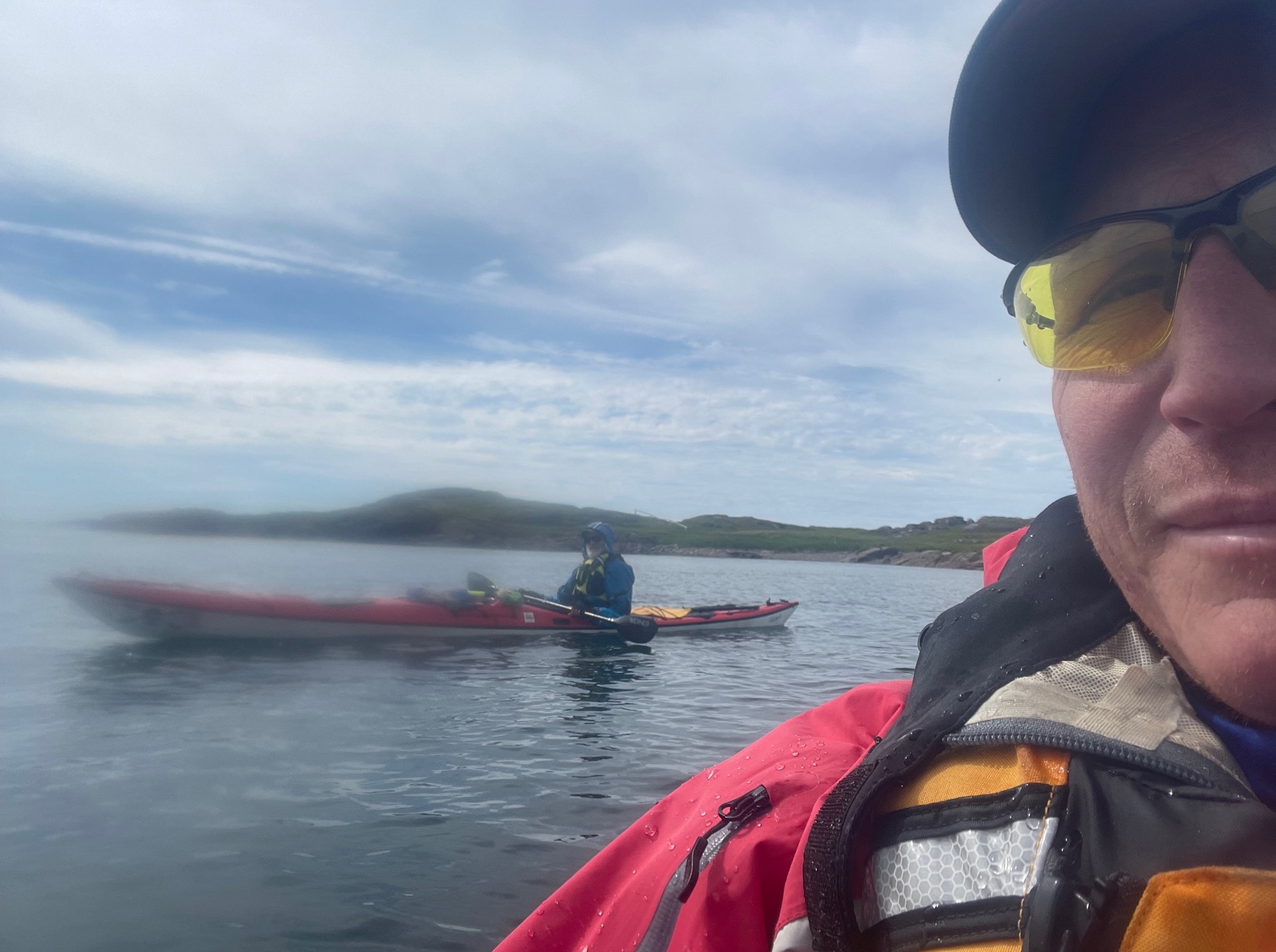
This brings me back to the present. As I said, I often have experienced these moments, but not to the degree I felt when Chris and I launched to visit L’Anse aux Meadows. It was strange, and I certainly was not expecting to become overwhelmed with emotion. We found a little cove on the far side of the Meadows and put our boats into relatively calm water. The tide was coming in, and the breeze was discernible on the water from the port side of our kayaks. There were steady ripples along the top of the water, and we could see rocks in the distance start to disappear. We launched and paddled to the north a bit to avoid a rather large rock garden and then headed westerly to Warren Island. I shouted to Chris across the water to land on the island so we could see what the Norse would have seen when coming into the Meadows. With an uneventful landing, we jumped out of our boats, and I found a route through the ground heather to a rocky perch. It was a good position to gain a great perspective. I could see more islands to the north and had a panoramic view of the harbor. Thinking Chris was right there with me, I turned around only to say, “where the hell are you? Where’d he go?”
Squinting, I could see my dear colleague still down by the boats looking at his phone. Chris looks at either his phone or watch in a very distinctive manner. He stops dead in his tracks, tilts his head low so he can peer over his glasses, and holds the phone inches from his face with both hands. I could see him in this slightly hunched position, in his blue dry suit, from atop the outcrop. I hustled back down because I didn’t want the seagulls—who clearly owned the island and were none too pleased with interlopers—to start and take aim. They were pretty agitated with me. I arrived at the shoreline just in time for Chris to turn and state, “it’s over there, around that peninsula,” as he pointed southward. “I think we need to go through those rocks there, and then the mounds are on the other side.” At this point, the blue dot on Chris’s phone had us locked in on Warren Island with the enlarged map identifying the settlement. He was fixated, and I could sense his energy. For four years, we had been talking about this experience. As Russell had advised us, “when we get to L’Anse aux Meadows, the first time you see it has to be from the water.” Now we were less than 500 meters away.
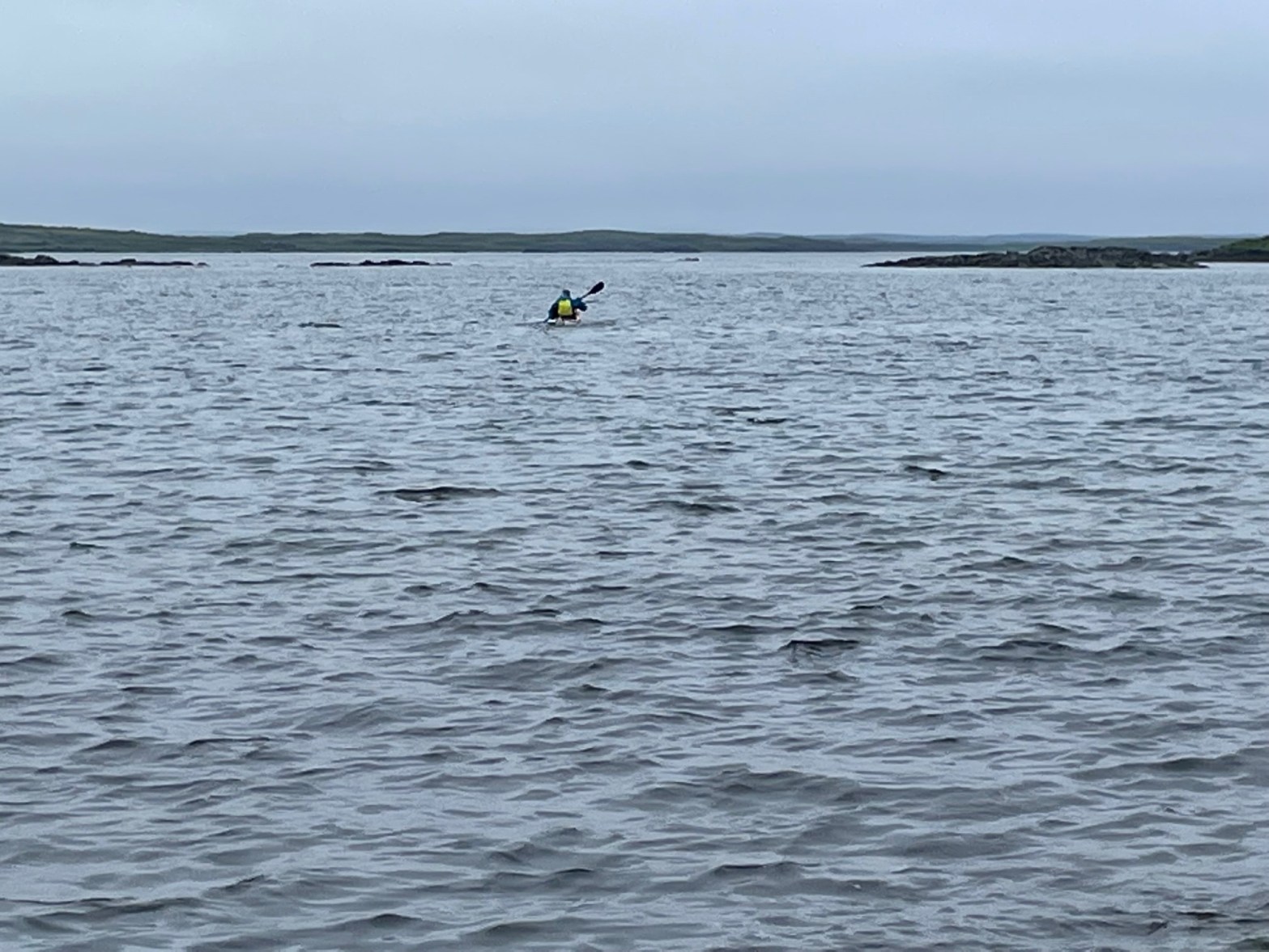
“There are a set of rocks to the left and then another to the right; we will need to split the difference and go directly between them,” I said as we discussed our route to the settlement site. In agreement, Chris got back into his boat and launched. I told him I would be right behind him, though first I would take one more photo. I snapped a picture, zipped up my PFD, looked up, and “…where did he go?” Chris had made off, as my father would say, “like a bat out of hell.” I could barely see him against the chop of the water and the misty sky, but really because he had decided today, at this moment, he would paddle at Mach 2.
I jumped in my boat, put my blade in the water, took two strokes and stopped. I had to pause.
The tears welled up behind my glasses, and I could sense that my heart felt full. It hit me. This was the culmination of triumph, tragedy, and opportunity. Years of conversation, discussion, training sessions, deliberation, and most importantly, an idea coming to fruition, a vision brought to life.
The real It for me, however, was in response to the overwhelming rush of pleasure and genuine happiness floating on a tiny bay just off the Labrador Sea while watching a dear friend and colleague, an incredible father and husband, and a charismatic academic leave me in his wake, because he was experiencing his moment of flow.
Follow along on our ongoing adventures in ten-minute intervals via this link:
 In the Wake of the Vikings
Nice!
LikeLiked by 1 person